
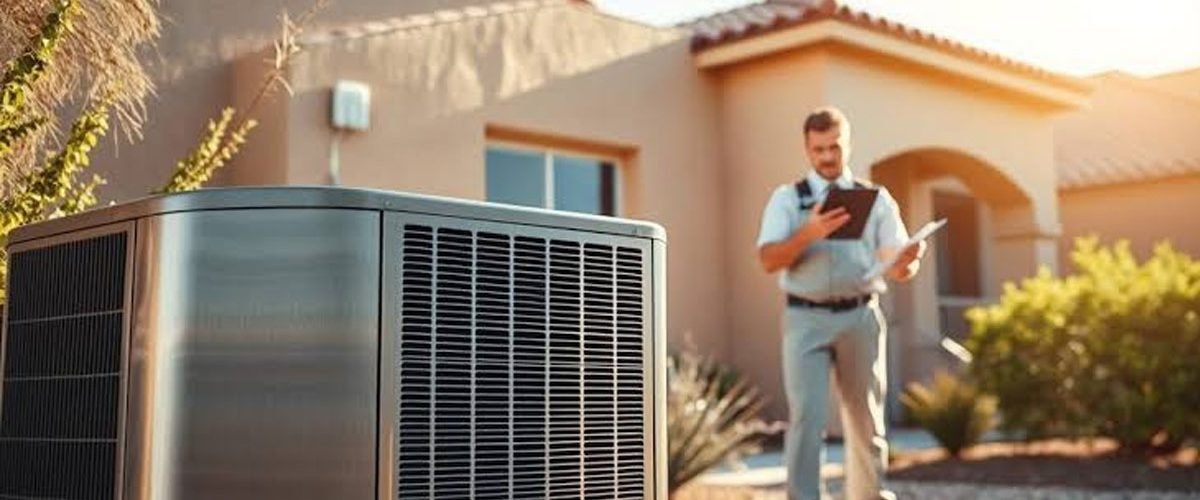
Replacing an air conditioning system in Surprise is a larger decision than replacing one in most U.S. markets, and not because the equipment is different. The decision matters more here because of how hard the equipment will work once it is installed. A West Valley AC system runs 2,000 to 2,500 cooling hours per year against outdoor temperatures that routinely exceed the 95-degree design baseline used to rate cooling equipment nationally. That operating reality shapes every aspect of the selection, from equipment sizing to efficiency ratings to warranty terms.
Table of Contents
Why Standard AC Sizing Rules Do Not Transfer to Surprise
The rule of thumb that one ton of cooling capacity serves 500 to 600 square feet of living space was developed for average-climate conditions, not for the West Valley. Surprise homes face several compounding factors that standard sizing formulas underestimate: west-facing wall and window exposure that generates significantly higher afternoon solar gain than north or east exposures, attic temperatures that reach 140 to 160 degrees Fahrenheit in July and drive heat load through ceiling insulation into the living space, and a daily temperature swing that keeps cooling demand elevated from late morning through the early hours of the following day.
A proper AC sizing assessment for a Surprise home uses Manual J load calculation methodology, which accounts for square footage, ceiling height, insulation R-value, window area and orientation, local design temperature data, and internal heat gains from occupants and appliances. A system sized by the old rule of thumb in a two-story Surprise home with west-facing windows and an R-30 attic frequently runs continuously without reaching the thermostat set point on the hottest afternoons. Proper sizing is the foundation on which every other AC decision rests.
Understanding SEER2 Ratings in a West Valley Context
The SEER2 efficiency rating that replaced the older SEER metric in 2023 measures seasonal energy efficiency over a full range of operating conditions rather than at a single peak point. In Surprise, where the system runs at or near maximum capacity for significant portions of every summer day, the distinction between a 16 SEER2 system and a 20 SEER2 system translates into real monthly cost differences on APS utility bills during June through September.
Arizona Public Service offers energy efficiency rebates on qualifying high-efficiency HVAC equipment through its residential cooling programs. These incentives change periodically, and homeowners replacing a system in Surprise should ask a licensed contractor about current APS rebate availability as part of any equipment comparison. The rebate amount often reduces the effective cost premium between a standard-efficiency and high-efficiency system to a range where the operating cost savings recover within a reasonable number of cooling seasons.
Resale Homes vs. New Construction: Two Different Conversations
Buyers purchasing existing Surprise homes need to evaluate the condition and remaining service life of the installed HVAC system with the understanding that Arizona’s operating demands compress that life significantly. A 10-year-old system in a Surprise resale home has accumulated roughly 20,000 to 25,000 operating hours. A comparable system in a Chicago home at the same age may have 7,500 to 10,000 hours. Remaining service life in the West Valley context should be assessed by a licensed contractor using actual equipment condition, not age alone.
Buyers in new construction communities like Heritage at Asante, North Copper Canyon, or Sterling Grove receive systems installed to builder specifications, which are not always the same as specifications a homeowner would choose independently. Builder-installed systems frequently meet minimum code and energy efficiency requirements without optimization for the specific home’s orientation, insulation quality, or occupancy pattern. A first-year post-move-in assessment by a licensed contractor identifies whether the installed system’s configuration matches the home’s actual load profile.
The Refrigerant Transition and What Surprise Homeowners Should Know
The HVAC industry is transitioning refrigerant types for environmental compliance reasons. R-410A, which has been the standard residential refrigerant since the phase-out of R-22 in the early 2000s, is itself being phased out in favor of lower global warming potential refrigerants including R-454B. Equipment manufactured after January 1, 2025 uses the new refrigerant type.
For Surprise homeowners replacing an existing system, this transition has a practical implication: a new system using R-454B requires service technicians with the appropriate EPA certification and tools for the new refrigerant. It also means that any future refrigerant service for a system using R-410A will draw from an increasingly limited supply as production of that refrigerant winds down. Homeowners with functioning R-410A systems approaching 8 to 10 years of age in Surprise should factor refrigerant availability into their planning horizon for eventual replacement.
Questions to Ask Before Committing to an AC Purchase in Surprise
A Manual J load calculation should be performed before any system size is recommended. Ask for a copy of the calculation or, at a minimum, a clear explanation of how the equipment size was determined for the specific home. Ask about SEER2 rating, not the discontinued SEER metric, and request a comparison of the top two or three options on estimated annual operating cost in Surprise’s climate. Ask about current APS rebate eligibility for the proposed equipment. Ask what refrigerant type the equipment uses and confirm the contractor’s service certification for that refrigerant. Ask about warranty terms separately for the compressor, parts, and labor, as these often differ and the compressor warranty is the most financially significant.
Establishing a Long-Term Service Relationship Before You Need One
The worst time to evaluate AC contractors in Surprise is during a mid-summer failure at 108 degrees Fahrenheit, when every licensed contractor in the West Valley is fully dispatched and the pressure to say yes to whoever arrives first is highest. Homeowners who establish a relationship with a licensed provider before equipment failure occurs have the advantage of knowing who they are working with, what their pricing structure looks like, and how they approach diagnostic decisions before the outcome matters most. Homeowners in Surprise who want to evaluate their current equipment or begin that service relationship can ask about air conditioning services in Surprise, AZ from licensed local contractors with specific experience in West Valley climate and load conditions.