A furnace problem always seems to happen at the worst possible time. When something goes wrong, the question isn’t just what’s broken, it’s whether it’s worth fixing at all. Deciding between repair and replacement can feel like a guessing game, but there are a few clear factors that make the decision much easier, well before a technician ever shows up at the door.
Table of Contents
Start With the Age of the System
Age is one of the most reliable indicators of where a furnace stands in its lifespan. Most furnaces last between 15 and 20 years, depending on how well they’ve been maintained and how hard they’ve had to work over the years. A furnace nearing the end of that range that’s showing problems is a much stronger replacement candidate than a five-year-old system with the same issue.
Homes with poor insulation or leaky ductwork tend to shorten a furnace’s effective lifespan, since the system has to run longer and harder to maintain the same indoor temperature. This is worth factoring in alongside the furnace’s actual age.
Apply the 50 Percent Rule
A commonly used guideline in the HVAC industry compares the cost of a repair to the cost of a full replacement. If a repair costs 50 percent or more of what a new furnace would cost, replacement is usually the better financial decision, especially for an older unit. A furnace that’s already had several expensive repairs in a short period is often signaling that bigger, more frequent problems are on the way.
This calculation becomes even more important once a furnace has crossed into its second decade of use, since additional repairs on an aging system rarely represent a good long-term investment compared to starting fresh with a new, more efficient unit.
Watch for Rising Energy Bills
A furnace that’s losing efficiency often shows it on the utility bill before anything else. If heating costs have crept up noticeably without a corresponding change in usage habits or weather patterns, the system may be working harder than it should to produce the same amount of heat. Older furnaces in particular tend to fall well below the efficiency standards of newer models, which can mean paying considerably more to heat a home than necessary.
According to ENERGY STAR, a joint program of the EPA and U.S. Department of Energy, older furnaces can operate at efficiency ratings as low as 56 to 70 percent, while modern high-efficiency models can reach 90 to 98.5 percent efficiency. That gap represents a meaningful amount of wasted energy and money for homes still running older equipment.
Pay Attention to Frequency of Repairs
One repair doesn’t necessarily mean a furnace is failing. A pattern of repeated repairs, especially across different components, is a much stronger signal that a system’s overall reliability is declining. When a furnace needs a service call every heating season, or multiple times within the same season, the cumulative repair costs often approach or exceed what a replacement would cost within just a couple of years.
Listen for Unusual Noises
Furnaces make some noise during normal operation, but new or worsening sounds are worth paying attention to. Banging or popping can point to a delayed ignition, which forces built-up gas to ignite all at once. Squealing often points to a belt or motor bearing issue. Rattling can indicate loose panels or, in more serious cases, a cracked heat exchanger, which is a safety concern rather than just a performance one. Any new noise, especially one that’s loud or persistent, is worth having evaluated rather than ignored.
Notice Uneven Heating Throughout the Home
A furnace that once heated a home evenly but now leaves certain rooms noticeably colder than others may be struggling to distribute heat effectively. This can stem from ductwork issues, a failing blower motor, or a furnace that’s simply undersized or worn out for the demands being placed on it. Uneven heating that develops gradually over time, rather than being a problem from day one, often points to a system in decline.
Consider Air Quality Changes
An aging or malfunctioning furnace can affect more than temperature. Increased dust, a persistent burning smell, or worsening allergy symptoms during the heating season can sometimes trace back to a furnace that isn’t filtering or circulating air properly anymore. While these symptoms have multiple possible causes, a furnace that’s aging out of its useful life is worth ruling out as a contributing factor.
When Repair Still Makes Sense
Not every furnace issue points toward replacement. A relatively young furnace with an isolated issue, like a faulty igniter, a worn capacitor, or a simple thermostat malfunction, is usually a straightforward and cost-effective repair. The key factors that shift the calculation toward replacement are consistently the same: advanced age, a pattern of repeated repairs, declining efficiency, and a repair cost that eats up a significant portion of what a new system would cost. Keeping these factors in mind ahead of time makes it much easier to respond calmly rather than reactively when a problem actually comes up.
Getting an Accurate Diagnosis
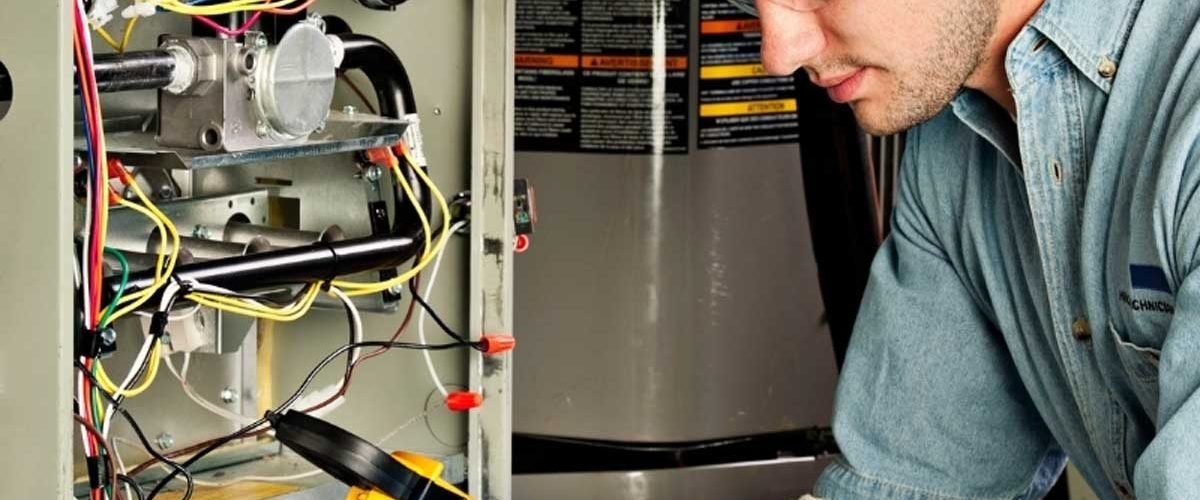
Because so much of this decision depends on the specific condition of a furnace, a hands-on evaluation gives far more clarity than guesswork. A professional furnace evaluation can assess the age, condition, and efficiency of a system and lay out the real cost comparison between repairing the current unit and replacing it, which takes a lot of the uncertainty out of what can otherwise feel like a coin flip decision.
Conclusion
Deciding between furnace repair and replacement comes down to a handful of consistent factors: the age of the system, the cost and frequency of repairs, energy efficiency, and any safety concerns that come up along the way. Weighing these factors together, rather than reacting to a single repair bill in isolation, leads to a decision that makes sense both for comfort and for the household budget over the long run. A little research before the next issue comes up puts homeowners in a much stronger position than scrambling to decide during an actual breakdown.