
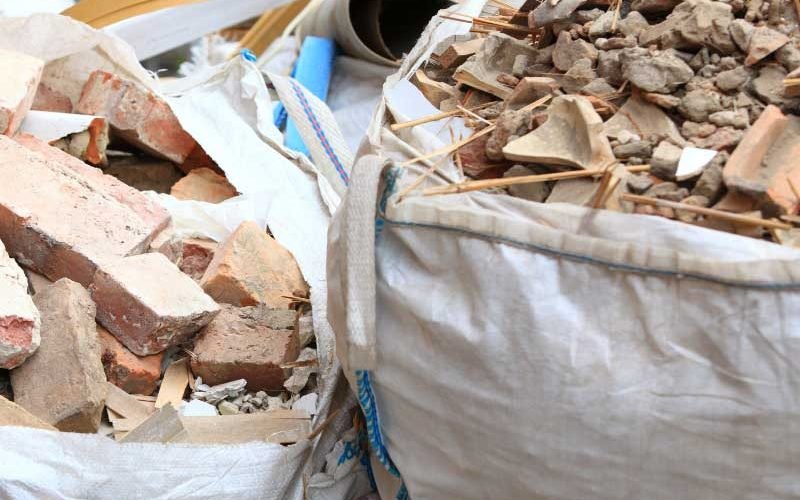
A remodel rarely ends when the last piece of new flooring goes down. There’s usually a pile of old cabinets, torn-out drywall, broken tile, and scrap lumber left behind, and figuring out what to do with all of it is its own project. Renovation debris adds up faster than most homeowners expect, and how it gets handled matters more than people realize, both for the budget and for the environment.
Understanding the options available before demolition starts makes the whole process considerably less stressful once the dust actually settles.
Table of Contents
Why Renovation Debris Adds Up Faster Than You Expect
Even a modest kitchen or bathroom remodel generates a surprising volume of waste. Old cabinetry, countertops, flooring, drywall, fixtures, and packaging from new materials all pile up quickly, and demolition tends to produce far more bulk than anyone anticipates going in. A single bathroom gut renovation can easily fill a pickup truck bed or more once tile, tub, vanity, and drywall are all accounted for.
The Environmental Scale of Construction Waste
Construction and demolition debris makes up a much larger share of the national waste stream than most people assume. According to the U.S. Environmental Protection Agency, the country generated roughly 600 million tons of construction and demolition debris in 2018, more than twice the amount of municipal solid waste generated that same year. Demolition activity accounts for the large majority of that total, while renovation and new construction make up a smaller share.
The good news is that a significant portion of that debris doesn’t have to end up in a landfill. Of the debris generated in 2018, well over half was directed toward some kind of next use, whether that’s recycled materials, aggregate, or other manufactured products, rather than sent straight to disposal.
Sorting Debris Before It Leaves Your Property
Sorting debris on-site, even loosely, makes a meaningful difference in how much of it can be recycled or reused instead of landfilled. Separating metal, wood, concrete, and drywall into distinct piles takes extra effort during an already chaotic renovation, but it dramatically increases how much material can be diverted from disposal. Many recycling facilities and haulers accept sorted loads more easily and at a lower cost than mixed debris, which can also translate into real savings on disposal fees.
What Can Be Recycled or Diverted from a Landfill
Several common renovation materials have real recycling value. Metal fixtures, pipes, and hardware are almost always recyclable through standard scrap metal channels. Concrete and masonry debris can often be crushed and reused as aggregate for driveways or new construction projects. Clean wood scraps, free of paint, stain, or treatment chemicals, can sometimes be chipped for mulch or used as biomass fuel.
Cabinets, doors, and fixtures in good condition are frequently accepted by donation organizations that resell them to fund community programs, giving usable materials a second life instead of ending up in a dumpster. Even old windows and doors sometimes find a second home through architectural salvage groups that specialize in reclaimed building materials.
Hazardous Materials in Older Homes
Renovations involving homes built before the 1980s carry an added consideration: materials like asbestos insulation, lead paint, and certain old adhesives require special handling rather than standard disposal. These materials shouldn’t be tossed in with general renovation debris, both for safety reasons and because most standard disposal services aren’t equipped or permitted to handle them.
Testing older materials before demolition begins, particularly in homes built before 1978 where lead paint is a known risk, is a worthwhile step before any major tear-out work starts, and it’s a step that’s easy to overlook in the rush to get a project moving.
Dumpster Rental vs. Professional Debris Removal
Homeowners generally have two main options for handling the bulk of renovation debris. A rented dumpster stays on-site for the duration of the project, giving homeowners or contractors the flexibility to load it gradually as work progresses. Professional debris removal services, by contrast, typically come in after a project wraps up and haul everything away in one visit, which works well for homeowners who don’t want a dumpster taking up driveway space throughout the entire renovation.
The right choice usually comes down to project timeline and how much debris accumulates at once. A longer renovation with steady, ongoing debris often favors a dumpster rental, while a shorter project or a single big cleanout after demolition tends to favor a one-time removal service.
Preparing Debris for Pickup
A little preparation makes any disposal method go more smoothly. Breaking down large items where possible, keeping sharp or hazardous materials clearly separated, and consolidating debris into an easily accessible area all speed up the process, whether a dumpster or a removal crew is handling the haul.
Checking local regulations on what can be placed at the curb versus what requires a permitted hauler also avoids fines or missed pickups, since rules vary significantly by municipality.
Choosing a Responsible Disposal Method
Not all debris removal is handled the same way once it leaves a property. Some haulers send everything straight to a landfill regardless of what could have been recycled or donated, while others actively sort loads to divert as much material as possible.
Services built around environmentally responsible junk removal sort materials by destination, sending what can be donated or recycled to the right place instead of defaulting to a landfill for everything. Asking a hauler directly about their sorting and disposal process before booking is a simple way to make sure a renovation’s leftover materials are handled responsibly.
Final Thoughts
Renovation debris is an unavoidable part of any remodel, but how it’s handled afterward doesn’t have to be an afterthought. Sorting materials, watching for hazardous substances in older homes, and choosing a disposal method that actually prioritizes recycling and donation all add up to a renovation that leaves less behind than it otherwise would, both on the property and in the broader waste stream. A little extra planning before the first hammer swings tends to pay off well after the project is finished.