Pets make a house feel like a home. They also have a way of testing everything in it. Cats shred, dogs lean, and both of them love a sunny window. If you have ever found a bent slat, a chewed cord, or a clump of fur stuck to a curtain, you know window coverings take a beating in a pet household.
You are far from alone. The American Pet Products Association reports that 95 million U.S. households own a pet, based on its 2025 National Pet Owners Survey. That is a lot of windows. The good news is that with the right materials and a few habits, you can keep your window treatments looking good and your pets safe.
Table of Contents
Why Windows Are Hard on Pet Owners
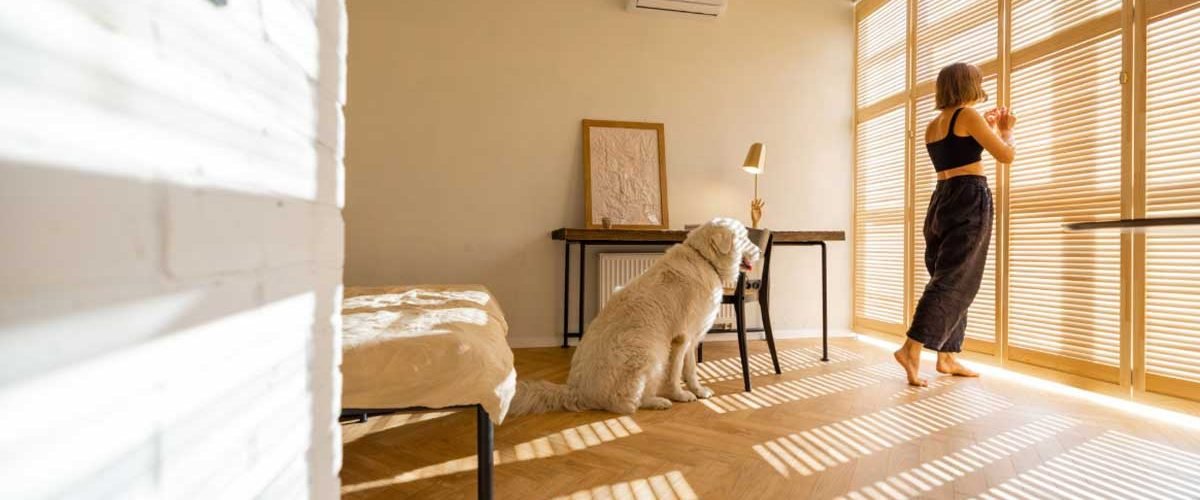
Windows are a pet’s favorite spot. They offer sun, a view, and plenty to bark or chirp at. That means window coverings get a lot of contact. Here are the usual trouble spots:
- Claws and teeth. Cats scratch fabric and climb it. Dogs and kittens chew cords and dangling edges.
- Bent slats. Pets push through blinds to look outside, and thin slats do not bounce back.
- Fur and dander. Hair and tiny skin flakes collect on fabric and slats, especially near a favorite sunny perch.
- Smudges and drool. Noses leave marks on glass and on anything within reach.
- Accidents and odors. Low hanging fabric can pick up smells if a pet has an accident or marks near a window.
Knowing what goes wrong helps you pick products that can handle it.
Choosing Materials That Can Take It
Not every window covering is a good match for a busy pet household. Here is how common options tend to stack up.
Faux Wood and Vinyl Blinds
These are a popular pick for homes with pets. They are sturdier than thin aluminum, they wipe clean easily, and they handle moisture and the occasional nose smudge. Slats are firm enough to resist most bending. They are not scratch proof, but minor marks are less noticeable than on real wood.
Aluminum Mini Blinds
These are inexpensive, but the slats bend easily. A cat that squeezes through to reach the glass can leave a permanent kink. If you have a pet that likes to peek out, this is probably not the best choice.
Real Wood Blinds
Wood looks great, but it can scratch, and it is more sensitive to moisture and spills. If you love the look, think about whether your pets can reach the slats.
Roller Shades
A smooth, flat shade is easy to wipe and does not trap much hair. It leaves no slats for pets to bend. Some cats like to bat at the bottom edge, so a cordless version mounted inside the window frame is a good idea.
Cellular Shades
These are known for insulation, and many are available cordless. Fabric can be damaged by claws, so they work best in rooms where pets cannot get to the window easily.
Interior Shutters
Shutters are among the toughest options. They are solid, they do not get chewed, and the louvers wipe clean with a damp cloth. They cost more up front, but they hold up to active pets better than most coverings.
Curtains and Drapes
Fabric has its own pros and cons. Choose a tightly woven, washable material. Loose weaves and delicate sheers snag easily on claws. Darker colors and busy patterns hide fur better than light solids. If you have a dog or cat that likes to lie on the floor by the window, hem panels so they hang just above the floor instead of puddling, which gives pets less to drag, chew, or soil.
Deal With the Cords First
Cords are one of the biggest concerns in any home. The Window Covering Safety Council, citing the Consumer Product Safety Commission, notes that corded window coverings are among the top five hidden hazards in our homes and pose a strangulation risk to young children. Pets can also get tangled in or chew on dangling cords.
The simplest fix is to go cordless. If you have older blinds with loops or pull strings, you can:
- Switch to cordless lift systems or wand controls
- Use cord cleats mounted high on the wall, out of reach
- Add tension devices or cord wraps that keep any remaining loops snug against the wall
Cordless coverings are cleaner looking as well, which is a nice extra.
Managing Fur, Dander, and Allergens
Even if no one in your home has allergies, pet hair and dander add up. GoodRx Health notes that pet allergens can linger in the air for a long time and can easily cling to fabric. That includes curtains and shades.
A simple routine keeps things under control:
- Dust weekly. Use a microfiber cloth on blinds and a soft brush attachment on shades and drapes.
- Vacuum fabric gently. A vacuum with a good filter helps trap dander instead of sending it back into the air.
- Wipe hard surfaces monthly. Use a damp cloth on faux wood, vinyl, or shutters. Dry the slats afterward.
- Wash what can be washed. Follow the care label on curtains and drapes, and clean them more often if your pets shed heavily.
- Spot treat quickly. Drool, muddy paws, and accidents are much easier to clean when they are fresh.
Know When a Deeper Clean Makes Sense
Everyday cleaning handles most of it. But after a few seasons with pets, some window treatments need more than a quick wipe. Heavy fur buildup, lingering smells, or sticky film on slats can be hard to remove at home, and some fabrics should not be washed in a regular machine. In those cases, many homeowners look into professional cleaning for blinds and drapes rather than risk shrinking, staining, or bending something that is expensive to replace.
Simple Ways to Protect Your Windows
You can also change the setup so your pets are less likely to cause damage in the first place:
- Give them their own window spot. A cushioned perch or pet bed near a window gives a cat or dog a place to look out without pushing through blinds.
- Trim nails regularly. It reduces snags on fabric and scratches on slats.
- Add a scratching post nearby. Cats are less likely to climb curtains if they have a better option.
- Raise the blinds when you are out. Pulling them up can keep a bored pet from playing with them.
- Keep an eye on young pets. Puppies and kittens go through a chewing phase. Take extra care with cords and low hanging fabric until they settle down.
A Quick Checklist
- Choose sturdy, wipeable materials like faux wood, shutters, or roller shades
- Go cordless wherever possible
- Pick tightly woven, washable curtains and hem them above the floor
- Dust weekly and wash fabric on a regular schedule
- Set up a pet friendly window perch
- Clean up spills and accidents right away
Final Thoughts
You do not have to give up nice window treatments just because you share your home with a pet. A little planning goes a long way. Pick materials that can handle claws and fur, remove cords that could cause trouble, and keep up with simple cleaning. Your windows will look better for longer, and your pets will have a safe, comfortable spot to watch the world go by.